

Wittman Truth Files #1: Affordability
We can’t afford to have Rob Wittman in Congress
Welcome to WTF: Wittman Truth Files. Each week we’ll open one of our WTFs to reveal how Rob Wittman has delivered on the issues of highest importance to all of us in VA-01.
We start with the highest priority of all: the cost of living. Groceries. Rent. Health care. The widening gap between what a paycheck buys today and what it bought a year ago.
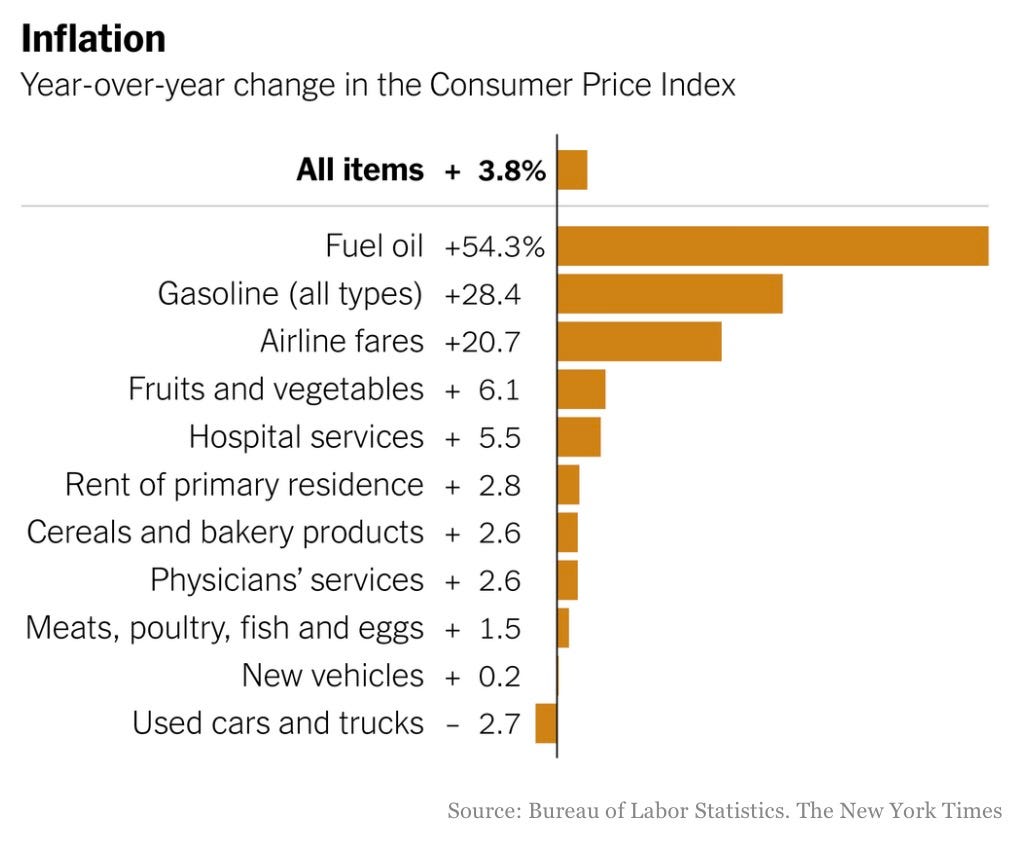
The Bureau of Labor Statistics has confirmed what every shopper at the Publix in Mechanicsville and the Food Lion in Tappahannock already knows. Inflation jumped to 3.8% in April — the highest annual rate since May 2023. Energy costs are up 17.9% year over year. Gasoline is up 28.4%. Beef costs 14.8% more than a year ago. The price of groceries rose 0.7% in a single month — the largest monthly increase since August 2022. Meanwhile, real average hourly wages (meaning wages adjusted for inflation) fell 0.3% over the last year – so every earned dollar buys less today than it did before Trump came into office.
Rob Wittman has done little to fix this. Instead he’s made several deliberate political choices that have made everything worse.
The “Working Families” vote that wasn’t
On July 3, 2025, Wittman cast a yes vote on the “One Big Beautiful Bill Act,” otherwise known as H.R. 1. He called it a vote for “working families.” Here is what working families actually got:
An estimated $187 billion cut to SNAP over the next decade, plus new state cost-shift requirements that kick in starting in 2028.
A roughly $1 trillion reduction in Medicaid funding over the same period.
The expiration of enhanced ACA premium tax credits, putting roughly 100,000 Virginians at risk of losing coverage at the end of 2025.
Between July 2025 (when the law was enacted) and January 2026, SNAP participation in Virginia dropped 12%. Nationally, more than 3 million people — an 8% decline — were pushed off food assistance. Those are not policy abstractions. Those are neighbors with empty cabinets as grocery prices are climbing astronomically.
Wittman’s response? At a July roundtable with the U.S. Chamber of Commerce, he insisted the bill would have “many positive impacts for working-class families.” He has continued to deny that his vote cut Medicaid in any meaningful way, even after the Congressional Budget Office estimated 10 million Americans will lose health insurance because of it.
The pledge Wittman signed and then broke
Before the vote, Wittman signed letters to House and Senate leadership pledging he would not vote for a budget that cut Medicaid. Then he did exactly that. The bill cleared its initial House passage 215–214. A single “no” — or even a missed vote — would have killed it.
That is not a procedural footnote. Wittman put his name to a promise, then traded the promise for a press release. WTF, Rob?
The tariff vote that hit your coffee cup
While grocery prices climbed, Wittman voted to keep them climbing. In September 2025, House Republicans — including Wittman — voted to protect Trump’s tariffs on Brazil. Brazil supplies about 30% of America’s coffee. Coffee prices have since spiked 20.9% year over year — the steepest annual increase since the 1990s.
Wittman claims on his official website that “[g]rocery prices are trending lower.” That hasn’t been our experience, and we bet it hasn’t been yours either. “Fighting for a more affordable America”? Come on, Rob.
Independent estimates put the cost of Trump’s tariffs at more than $2.1 billion annually for Virginians, and roughly $830 per household. Wittman voted to keep them in place. The administration eventually walked back tariffs on coffee, beef, and a handful of other items in November, but economists are clear that the price relief — if it comes at all — will take many months. Inventory bought at the higher tariff rate is still working its way to grocery store shelves.
The tax break with his name on it
In October 2025, the Institute on Taxation and Economic Policy (ITEP) reported that Wittman personally stands to save between $19,900 and $59,300 a year thanks to a pass-through deduction in the same bill he voted for. ITEP pegged the average middle-income earner’s benefit from the bill at somewhere between $40 and $50.
Read those numbers again. A working family in Spotsylvania might save the price of a tank of gas. The congressman who voted for the bill could save the cost of a small SUV. While Wittman gets richer, you pay more for food, housing, and healthcare. That is not a partisan accusation. It’s arithmetic, and it’s definitely a WTF moment.
The late, lonely vote
In January 2026, Wittman became one of 17 Republicans to vote yes on a three-year extension of the ACA premium tax credits — the same credits his July vote had let expire. He framed it as opposing the prospect of “allowing those costs to spike overnight” but, by that time, his vote was simply a performative gesture to look like he was protecting us. Wittman knew his colleagues would not extend the credits, and of course they didn’t.
Allowing those costs to spike was exactly what Wittman voted for six months earlier. His contrary vote arrived only after the bill came due, after constituents flooded his tele-town halls, after the longest government shutdown in American history, and after nine Democrats had already filed to challenge his seat. And it was too little, too late — thousands of First District families had already received their 2026 renewal notices.
The town hall he won’t hold
Through all of this, Wittman has avoided face-to-face contact with the constituents bearing the costs of his decisions. When nearly 200 voters packed an American Legion post in Midlothian in February 2025, he was absent; his staff said he was in D.C. When community organizers invited him to a Henrico gathering that March, his D.C. office told them staff “would not attend anything they had not planned themselves.” His October 2025 tele-town hall was so heavily filtered that constituents who had signed up days in advance reported that they never received the promised call. And those who could attend had no chance to ask questions that weren’t pre-screened.
Wittman hasn’t held an in-person town hall meeting since 2017. That’s nine years ago. A representative who genuinely believed his policies were helping working families would meet those families in person. Silence is its own kind of answer.
What this means for you
Inflation is up. Wages are down. SNAP rolls in Virginia have shrunk by tens of thousands. The Federal Reserve is no longer expected to cut rates this year, which means credit card balances, mortgages, and car loan rates will keep rising. The price of everything is spiking.
Rob Wittman cast votes for every single one of these outcomes. Then he tells you that the bill that caused them was for the benefit of working families.
The next time you hear him use that phrase, ask which working family. Ask whose grocery bill. Ask whose Medicaid. Then call his DC, Glen Allen, or Yorktown office, show up at his next mobile office hours, and remind him whose district this is. Because Virginia’s First District cannot afford Rob Wittman.
More Wittman Truth Files will be released next week. We’re just getting started.
The Wittman Truth Files (WTF) is a weekly series profiling the gap between Rep. Rob Wittman’s public claims and his voting record. If you found this useful, share it with a neighbor and your social channels, and make sure you subscribe to get next week’s installment right in your inbox.
Well said.
To pile on to the town halls he refused to attend, there was another one in the standing-room only Twin Hickory Library at the end of April 2025. Three strikes, Rob, you’re out.
https://virginiamercury.com/2025/04/26/wittman-constituents-host-town-hall-in-his-absence-to-address-immigration-federal-funding-concerns/
Brilliant-keep the truth coming!!!!